Donors
3 Ways to Use your Donor Data to do More for Your Mission
How an organization interacts with its donors plays a significant role in the overall effectiveness of the group’s fundraising efforts.
Most nonprofits never check donation page abandonment. Here is how to find your drop-off, fix mobile friction, and recover lost gifts.
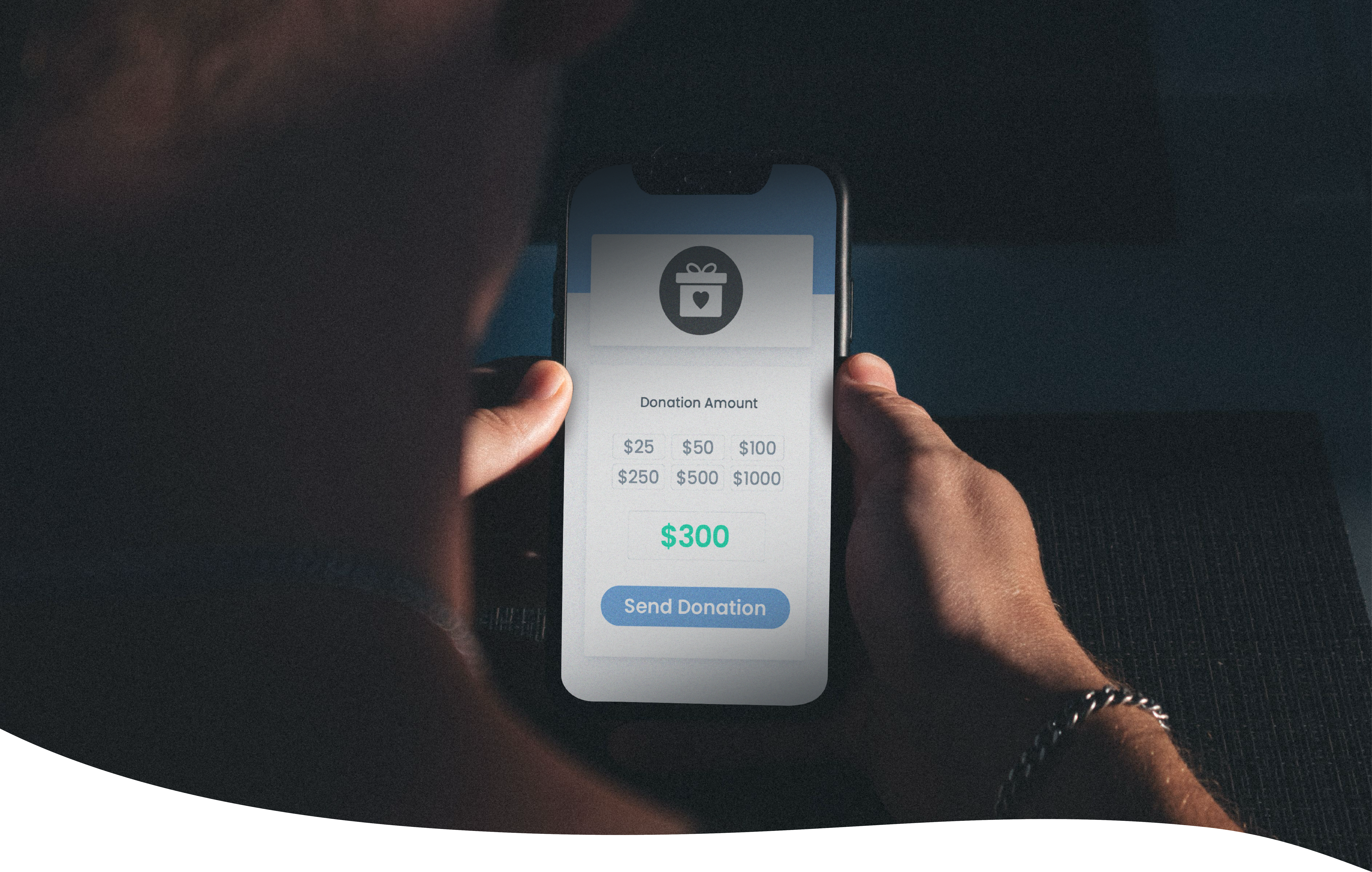
Quick answer: Donation page abandonment is the silent leak in most nonprofit fundraising, and it concentrates on mobile, where slow pages, desktop-style layouts, and too many form fields stop donors who already decided to give. The Pulse of the Donor 2025 report confirms that a large and growing share of online gifts happen on phones, yet most organizations never look at their drop-off analytics. Track your checkout abandonment rate, separate mobile from desktop, and fix one or two friction points at a time.
Donation page abandonment is the share of donors who start a gift and never finish it, and you should track it because every abandoned donation is a donor who raised a hand and then got stopped by friction you can often remove. If people come to your checkout page, or make it that far and then do not finalize the gift, you need to know about it. Some of that friction you can change, and some of it you cannot, but all of it matters.
Most organizations do not know their abandonment number because they are not looking at their drop-off analytics. That is the real problem. It is very easy to set up these days to see what people do when they arrive at your donation page, and I can promise you that the for-profit companies whose sites you visit are paying close attention to this exact number. For BetterUnite users, we offer this through integrations with Fundraise Up and Feather, and this kind of visibility is available on most serious fundraising platforms.
There is a useful way to picture it. Treat your donation page the way a store treats its checkout line. If half the people who picked up an item set it back down at the register and walked out, you would not shrug and reorder inventory. You would go stand at the register and watch what was going wrong. Your donation page deserves the same attention, and your analytics are how you stand at that register without physically being there.
Donation page abandonment costs you real money that never shows up on any report, which is exactly what makes it so dangerous. A donor who abandons did not say no to your mission. They said yes, started the gift, and then got stopped by something you could often have prevented. The intent was there. The friction is what ended it.
Because that loss is invisible, there is no failed line item, no bounced check, and no awkward conversation, most teams never account for it, and so it never competes for attention against the gala or the grant report. That is the trap. You cannot prioritize a leak you cannot see. Naming the number is what turns a vague worry into a fixable problem with an owner and a deadline, which is the whole reason to start measuring.
Mobile is where donations get lost because the experience often breaks even when the page technically loads on a phone. Mobile giving is a primary channel now, not a nice to have, and a significant, growing portion of online donations are completed on phones. The nuance that trips people up is that almost every website opens on a mobile device, but opening on mobile is not the same as being optimized for mobile.
When I say mobile giving, I mean the actual experience. What does the donor see? Is the page built for a phone, or is it a desktop layout squeezed onto a small screen, with too many fields, slow loads, and a flow that bounces the donor back? It helps to remember how new this all is. When BetterUnite began in 2018, online giving was only about 16% of all donations, a surprisingly small slice at the time. The channel landscape today is almost unrecognizable, which is why you need to be able to build and choose a layout for desktop and a separate one for mobile.
You can fix most of the friction that matters: too many form fields, slow page loads, and confusing multi-step flows. Some abandonment is genuinely out of your control. A donor sets the phone down because a child walked in, leaves the room, and never comes back. But the controllable share is large, and it is costing you real money you will never see on a report.
The simplest lever is form length. Keep your donation as short as the moment allows. I know you want all of the donor's information, and you should gather it, but the first transaction is rarely where you will get it. Anyone who has filled out a long pledge form knows the feeling of glazing over halfway through. Shorten the path to the gift first, then use stewardship to learn the rest.
Reduce abandonment by measuring the rate, separating mobile from desktop, and changing one or two things at a time so you can actually see what worked. Go into your fundraising platform analytics, which sometimes means connecting an integration or two, and find out how many people started a donation and did not finish it. If that number is high, the page needs work.
Even better, find out which donations were attempted on desktop versus mobile, because you can, and then make separate adjustments to each. The discipline is what matters here. Do not change everything at once. Change one or two elements, watch how it performs, and then try the next thing if the number does not move. That way you learn what your donors actually respond to instead of guessing.
One more piece of discipline: start where the volume is. Fix the page that the most donors actually see before you polish a campaign page that gets light traffic. A small improvement on your main donation page will almost always return more than a perfect rebuild of a page that few people visit, and it gives you a faster, clearer read on whether your change worked.
What is a good donation page abandonment rate?
There is no single universal number, but any abandonment rate high enough to surprise you is a signal to act, and the only truly bad rate is the one you are not measuring.
Why are my mobile donations lower than my desktop donations?
Usually because your donation page was designed for desktop and carries too much friction onto a small screen. Check your load speed, your field count, and whether the layout was built for mobile specifically rather than just shrunk to fit.
How do I see my checkout abandonment data?
Most modern fundraising platforms expose it, sometimes after you connect an analytics or checkout integration. On BetterUnite this is available through integrations with Fundraise Up and Feather.
Pull your checkout abandonment rate, split it by device, and fix the single biggest friction point first. If you cannot see the number at all, that is the gap to close.
Email support@betterunite.com for a walkthrough of how to set this up.

Leya Simmons
Co-founder & CEO | BetterUnite
The Co-founder and CEO of BetterUnite, a platform supporting thousands of nonprofits, she brings a unique lens to the sector, shaped by 15+ years as a private art dealer and gallery owner, board leadership at organizations like the Austin Museum of Art and the Texas Film Hall of Fame, and her own experience navigating nonprofit fundraising as board president of Community Yoga Austin. A yoga teacher, a female tech executive, and a mother of five, she is passionate about equipping nonprofits with the tools they need to do more with less.
How an organization interacts with its donors plays a significant role in the overall effectiveness of the group’s fundraising efforts.
The nonprofit tech landscape is shifting fast. Here’s how to stay vigilant, protect your donor relationships, and choose software you can trust,...
This article will cover the facts and data on how to engage donors with email marketing.